


Placali – Fermented cassava flour - 1kg
Placali is a traditional Ivorian preparation made from fermented cassava.Dehydrated for better preservation, it allows you to easily prepare a smooth and creamy dough, traditionally served as an accompaniment to sauces. Naturally gluten-free. Ingredients…
Read more Show less
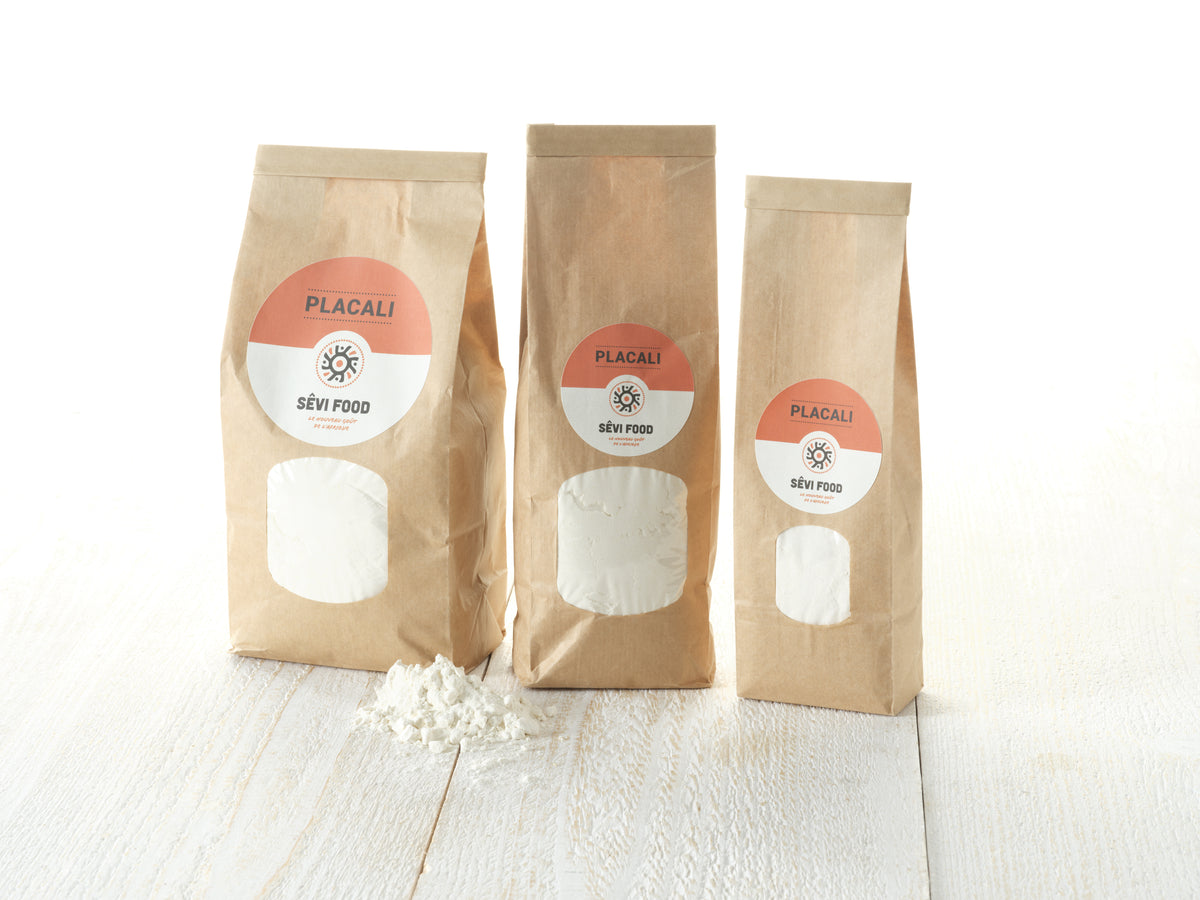
Placali is a traditional Ivorian preparation made from fermented cassava.
Dehydrated for better preservation, it allows you to easily prepare a smooth and creamy dough, traditionally served as an accompaniment to sauces. Naturally gluten-free.
Ingredients: Cassava (100%)
Origin: Côte d’Ivoire
Final packaging: Switzerland
Preparation instructions:
Mix 500 g of flour with 1 to 1.5 liters of cold water. Cook for about 30 minutes over medium heat, stirring constantly until you obtain a smooth and homogeneous dough. Tip: start with 1 liter of water, then gradually add more water if the dough becomes too thick.
Store in a dry place. Reseal the bag tightly after opening.
Additional information
Best before: see date on the packaging.
Batch: indicated on the bag.
Net weight: 1,000 g
Couldn't load pickup availability
-


Ready to cook
-

Fermented
-

GLUTEN-FREE


Ingredients
Nutritional values
Storage

PREPARATION INSTRUCTIONS
SêviFood Placali is simply prepared with water.
Mix 1 part flour with 3 parts water, then cook over low heat for 30 minutes, stirring regularly until you obtain a smooth, soft, and shiny dough.
Placali pairs perfectly with seed, okra, peanut, or tomato sauces.
Tip: the longer it is cooked and the more it is worked, the more elastic and tender the texture becomes.
Our recipe suggestions
Discover different ways to cook Placali and get inspired to create your own.


Placali
This is a fermented cassava dough, obtained by grinding, pressing, and letting the tuber rest. Its texture is unique: at once elastic, smooth, and slightly translucent. On the palate, it stands out for a refreshing hint of acidity that perfectly balances the richness of the sauces that accompany it.
The art of pairing
Placali is never enjoyed alone. It is the preferred partner of creamy, flavorful sauces:
- Palm Nut Sauce: Extracted from palm nut pulp, it brings a velvety sweetness.
- Kopè Sauce (Slimy): Made with okra or baobab leaves, it makes the dough easier to swallow.
- Proteins: It usually includes smoked fish, tripe (serviettes), beef skin (kanda), or crab.
A convivial moment
Eating Placali is a sensory experience. Traditionally, it is eaten with the fingers, forming small balls that are dipped generously in the sauce. It is the favorite dish of small neighborhood maquis, where people gather early in the morning to fuel up.
PRODUCTION PROCESS
An artisanal process that requires a lot of work and patience.
Our cassava is carefully harvested in small villages located in central Côte d'Ivoire.
The cassava is processed in Switzerland in compliance with international quality standards.
CASSAVA PREPARATION
1. Cassava root harvest
After harvest, the roots are prepared for processing: they are peeled, cut, and washed before being ground.
2. Grinding of cassava, ferment
The prepared roots are ground to obtain a cassava paste that can then ferment.


DOUGH PREPARATION
3. DOUGH Fermentation
The cassava dough is left to ferment. This step contributes to the development of the slightly tangy flavor characteristic of Placali.
4. Pressing the fermented paste
After fermentation, the dough is pressed to remove some of the water and continue its transformation.
Dough dehydration
Fermented cassava paste is dried to reduce its moisture content and allow it to be stored in dehydrated form.